During Read Across America Week, I used one of my students’ favorite Dr. Seuss stories, Yertle the Turtle, as an opportunity to explore civic themes and leadership with my elementary students. Dr. Seuss often embedded important lessons about fairness, power, and responsibility in his books, making them a wonderful starting point for meaningful conversations about citizenship.
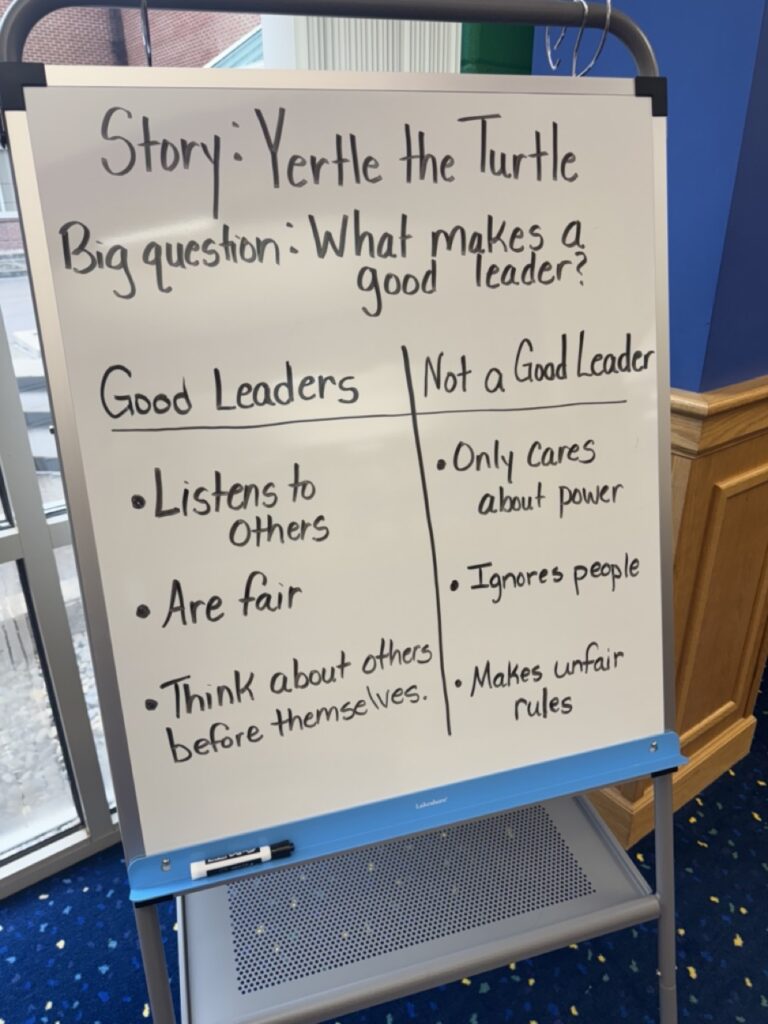
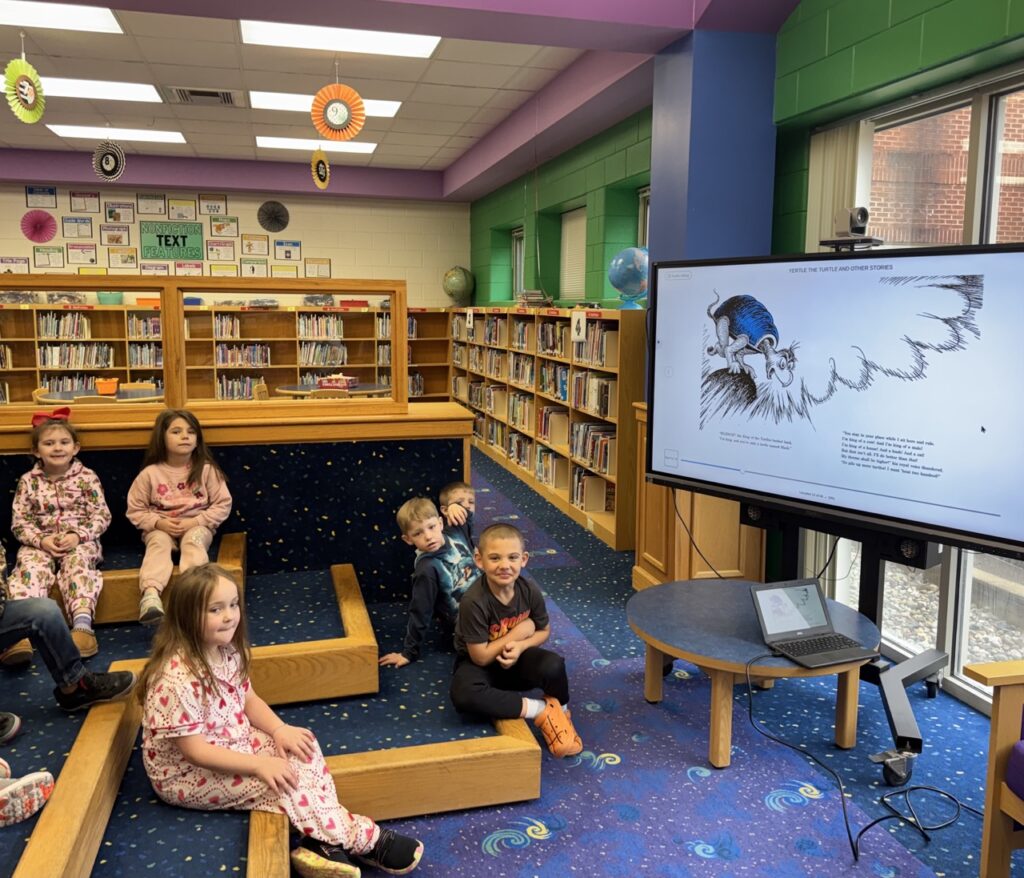
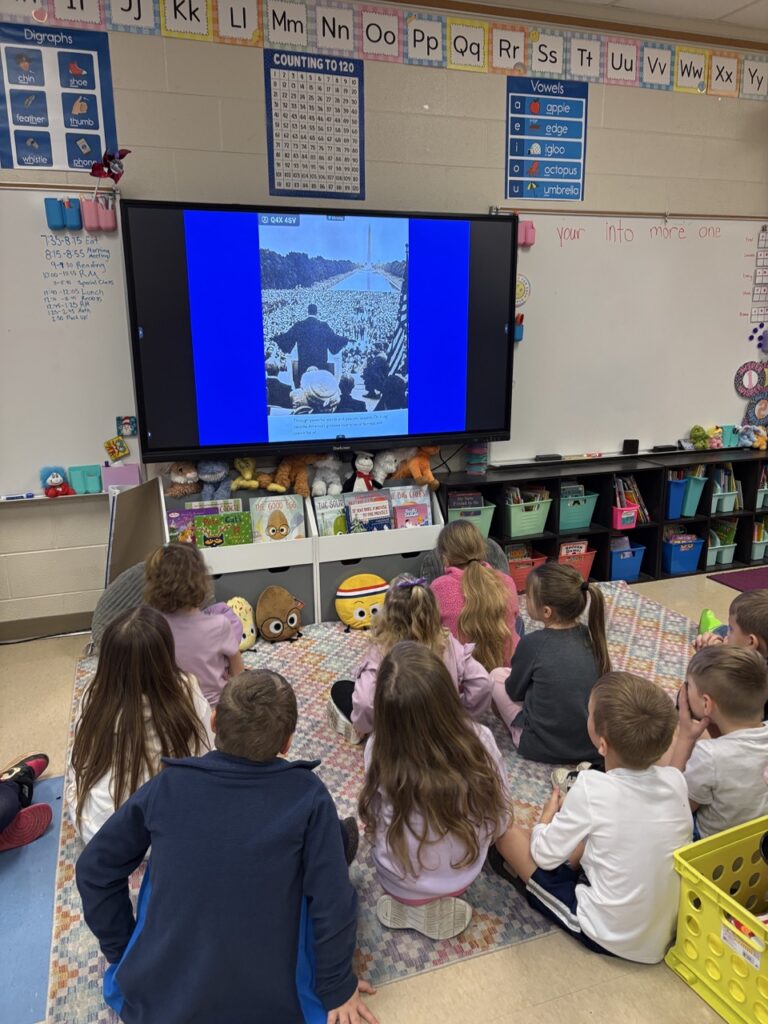
With my younger students, we focused on character traits and leadership. As we read the story together, students discussed what makes a good leader and how leaders should treat the people they serve. We talked about qualities such as fairness, kindness, listening to others, and making decisions that help the whole community rather than just oneself. Students quickly recognized that Yertle did not show these traits and began identifying ways a leader should act differently.
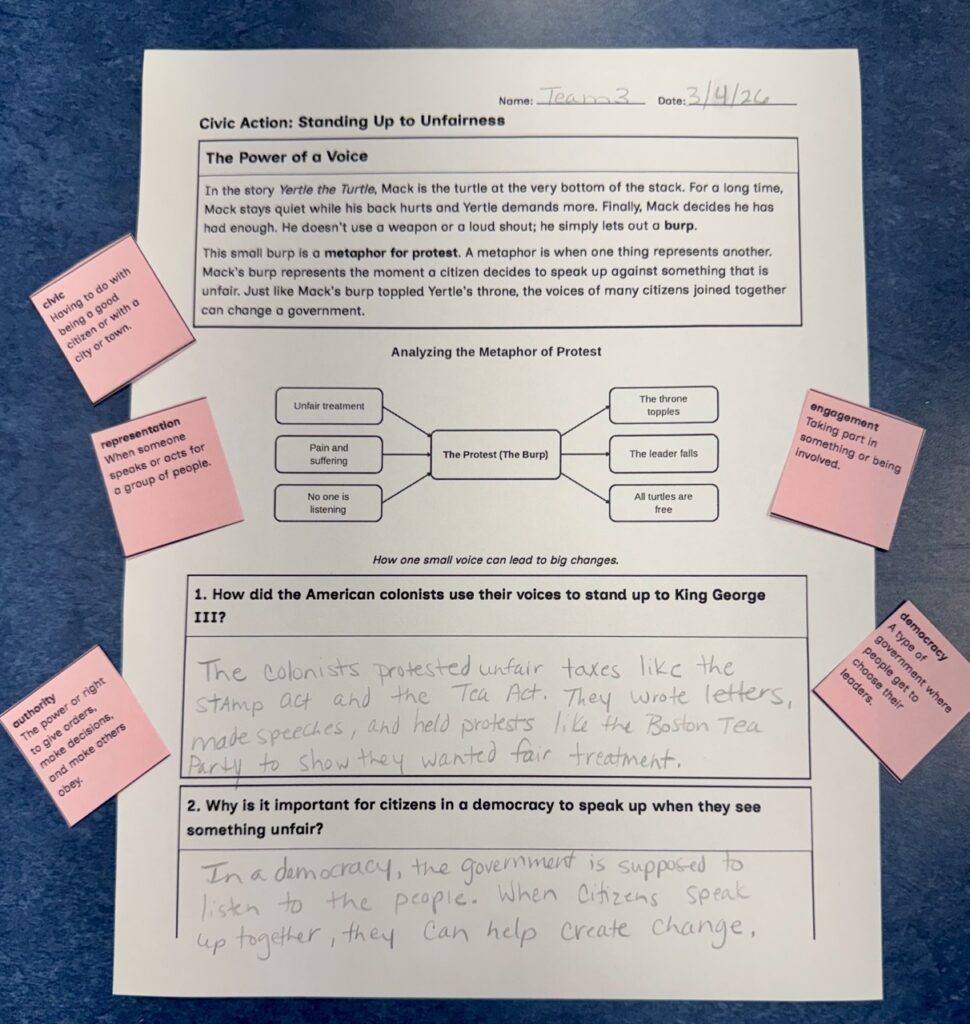
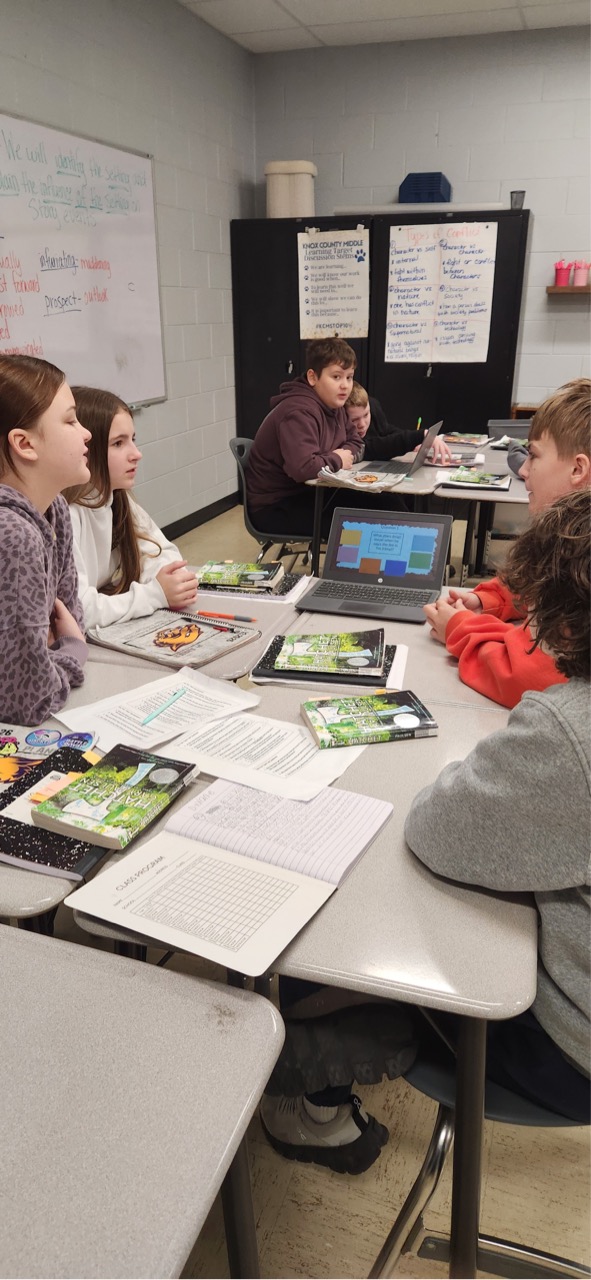
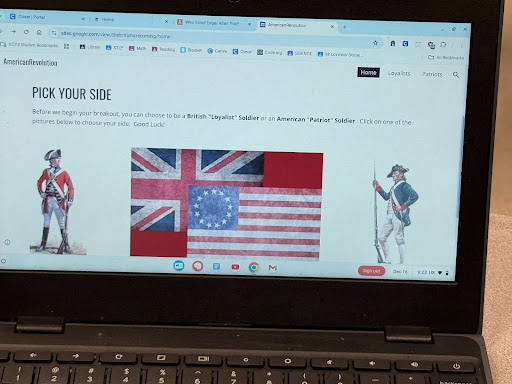
With my intermediate students, especially fifth grade, we took the discussion a step further by connecting the story to American history. Students compared Yertle’s leadership in the story to the leadership of King George III. Through reading and discussion, students explored the idea of tyranny and how leaders who ignore the needs and voices of the people can create unfair systems. In the activity, students compared how Yertle stacked turtles to build his throne with how the colonists experienced burdens such as taxation without representation under King George III.
This conversation connected naturally to our discussions about the upcoming 250th anniversary of the United States in 2026, also known as the United States Semiquincentennial. Students have been learning about the founding of our nation and why the colonists believed their voices should matter in government. By linking a familiar story to real historical events, students were able to better understand the importance of representation, fairness, and civic responsibility.
To extend student learning, I used Diffit, a resource provided to participants in the KEDC grants, to create differentiated reading passages, comparison activities, and writing prompts connected to the story. Diffit allowed me to quickly generate engaging materials that helped students analyze the themes of tyranny, democracy, and citizen voice. Students completed comparison charts, responded to questions about leadership, and even wrote persuasive responses imagining whether they would have protested against King George III in 1776.
One of the most powerful discussions came from examining Mack, the turtle at the bottom of the stack. Students talked about how Mack’s small act of protest represents the idea that even one voice can make a difference. This message helped students see how citizens throughout history—and even today—can speak up when something is unfair.
Using Yertle the Turtle during Read Across America Week allowed my students to see that literature can help us understand history, leadership, and the responsibilities of citizenship. By connecting a beloved story to civic learning and the upcoming Semiquincentennial celebration, students were able to explore big ideas about democracy in a way that was engaging, meaningful, and memorable.
Melissa Neeley, Library Media Specialist
Brodhead Elementary School
K-5
Rockcastle County Schools