What does it take to be a good neighbor, a great student, and a responsible citizen? This week, students in Mrs.Banks’ classroom went beyond the textbooks to define civic virtue and discover how simple rules serve as the “training wheels” for a strong democracy.
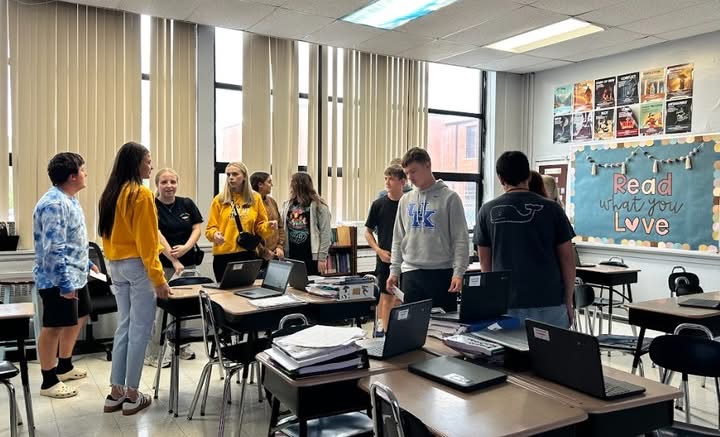
Through a series of interactive iCivics-inspired lessons, the class transformed into a hub of civic inquiry, exploring how our daily actions impact the community around us.
The journey began with a simple but profound question: What is civic virtue? Students defined it not as a dry list of laws, but as the “heart” of how we live together. By practicing virtues like honesty, courage, and responsibility, students realized they aren’t just following orders—they are contributing to the common good.
A major highlight of the lesson was a deep dive into the “Why” behind the rules in our classrooms, schools, and communities. Students engaged in spirited discussions to identify how rules act as a guide for practicing virtue:
- In the Classroom: Rules about raising hands encourage patience and respect.
- In the School: Hallway expectations promote safety and self-control.
- In the Community: Traffic laws and littering ordinances reflect civic-mindedness and care for the environment.
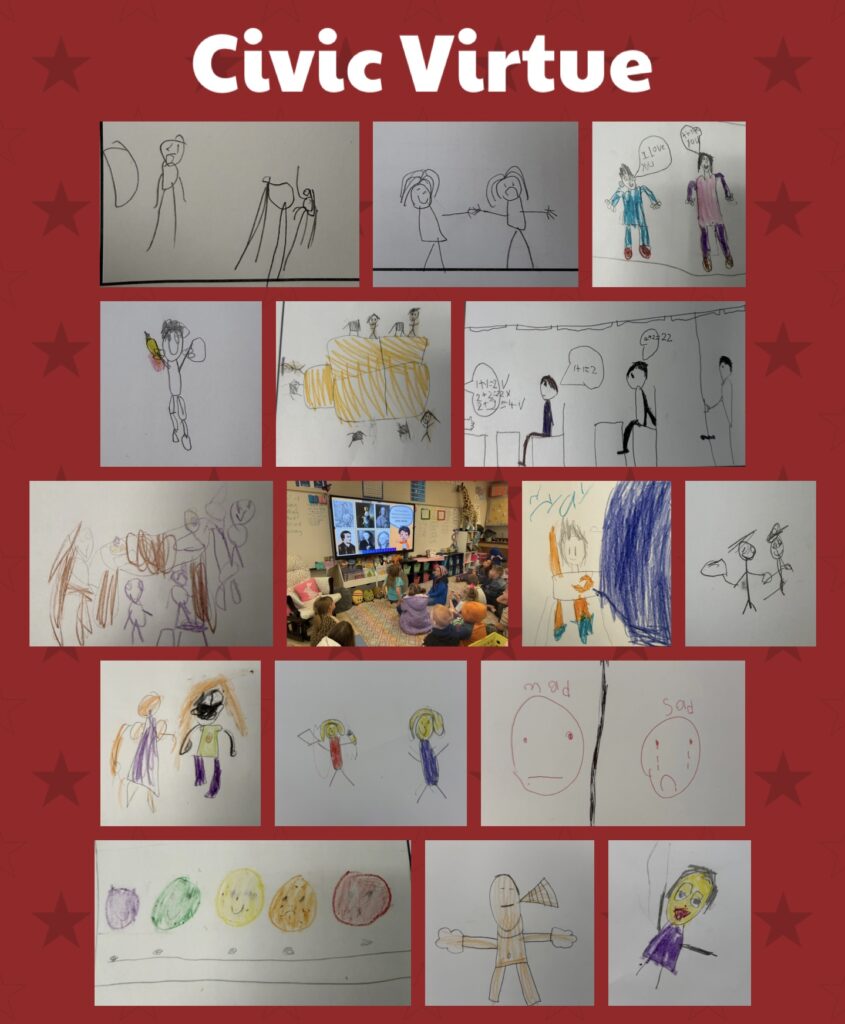
To wrap up the unit, the classroom turned into an art gallery. Each student chose a specific virtue to illustrate, bringing the concepts to life through vibrant drawings and personal presentations.
The students showcased four key pillars of civic behavior:
- Work Hard: Focusing on the perseverance needed to solve tough problems.
- Think Before You Act: Demonstrating self-reflection and the impact of our choices.
- Share and Help Others: Illustrating generosity and community support.
- Speak Up: Highlighting the courage required to stand up for what is right.
“When we follow the rules and help each other, the whole school feels like a better place,” said one student during their presentation. “That’s civic virtue in action!”